

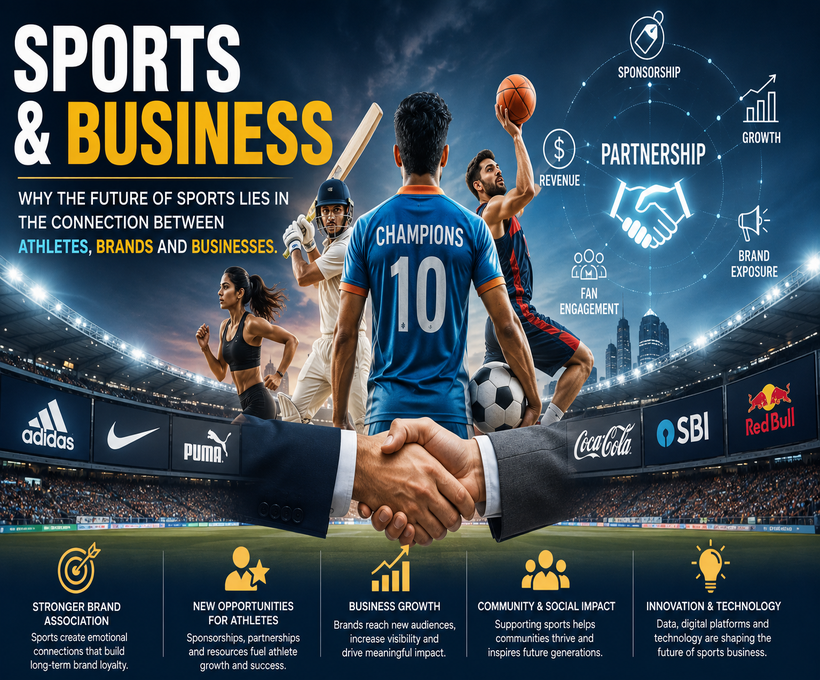
Sports is no longer only about competition, trophies, and entertainment. It has become a powerful business ecosystem where athletes, brands, sponsors, clubs, media companies, technology platforms, and fans are increasingly connected.
Today, a successful athlete can also become a brand. A sports team can become a global business. A company can build stronger customer relationships through sports partnerships. At the same time, digital platforms can connect emerging athletes with sponsors and businesses that may help support their careers.
This growing relationship between sports and business is shaping the future of the industry.
Sports Has Become a Powerful Business Ecosystem
Modern sports creates opportunities far beyond the playing field.
Revenue can come from:
- Sponsorships
- Advertising
- Merchandise
- Broadcasting
- Ticket sales
- Digital content
- Events
- Brand collaborations
- Athlete endorsements
- Sports technology
- Training and academies
As audiences grow and digital platforms make sports more accessible, businesses are finding new ways to participate in the sporting economy.
This benefits not only major leagues and famous athletes but also emerging players, local academies, tournament organizers, and grassroots sports communities.
Athletes Are Becoming Personal Brands
In the past, athletes were mainly known for their performance in competition.
Today, many athletes also build strong personal brands.
Their personality, values, social media presence, achievements, communication style, and relationship with fans can influence how businesses see them.
A successful athlete can become a powerful marketing partner because fans often connect emotionally with sports personalities.
Brands may collaborate with athletes for:
- Product endorsements
- Social media campaigns
- Events
- Advertisements
- Community initiatives
- Brand ambassador roles
- Promotional content
This creates additional income opportunities for athletes while allowing businesses to reach highly engaged audiences.
Brands Gain Trust Through Sports
Sports creates emotion.
Fans support teams and athletes with passion, loyalty, and long-term interest. Businesses understand the value of this emotional connection.
When a brand becomes associated with a respected athlete, team, or sporting event, it can strengthen its visibility and reputation.
Sports sponsorship can help businesses:
- Increase brand awareness
- Reach new audiences
- Build customer trust
- Enter new markets
- Create memorable campaigns
- Connect with younger consumers
For this reason, sports marketing has become an important strategy for many companies.
Sponsorship Can Transform an Athlete’s Career
For emerging athletes, financial support can be extremely important.
Professional training requires money for coaching, equipment, nutrition, travel, accommodation, tournament fees, fitness support, and medical care.
Many talented athletes struggle because their families cannot continue paying these expenses.
Business sponsorship can help reduce this pressure.
A company may support an athlete financially or provide equipment, training resources, travel assistance, or professional services.
In return, the athlete may represent the company through competitions, social media, events, or promotional campaigns.
When structured properly, this relationship benefits both sides.
Emerging Athletes Need Better Access to Brands
One of the biggest challenges in sports sponsorship is visibility.
Large brands usually know about famous athletes. But thousands of promising young players may never reach potential sponsors.
This is where professional sports platforms can play an important role.
Athletes could create verified profiles that include:
- Achievements
- Tournament history
- Rankings
- Statistics
- Videos
- Social media reach
- Upcoming competitions
- Sponsorship requirements
Businesses could then discover athletes based on sport, location, performance, audience, or sponsorship budget.
This creates a more transparent marketplace between sporting talent and commercial opportunities.
Small Businesses Can Participate Too
Sports partnerships are not limited to multinational companies.
Local businesses can also benefit from supporting athletes and sporting events.
For example, a restaurant could sponsor a local football team. A fitness center could support an athlete’s training. A sports equipment store could provide kits for a school tournament.
These partnerships help businesses build strong relationships within their communities.
At the same time, athletes and local sports organizations receive valuable resources.
This makes the connection between sports and business much more inclusive.
Sports Teams Are Becoming Professional Brands
A strong sports team today needs more than talented players.
Teams must also think about branding, fan engagement, sponsorship, merchandise, media, digital content, and commercial partnerships.
Successful clubs build identities that people want to follow.
Their logo, colors, players, stories, social media presence, and community activities become part of the brand.
When fans feel connected to a team, commercial opportunities increase.
Businesses are more likely to invest in teams that have strong audiences and professional management.
Digital Platforms Are Changing Sports Business
Technology has made the relationship between sports and business faster and more measurable.
Digital platforms allow athletes, teams, brands, and fans to connect directly.
A sports platform could help businesses identify:
- Emerging athletes
- Popular local teams
- Growing tournaments
- Sports communities
- Sponsorship opportunities
- Audience engagement
Businesses could also measure how many people viewed a campaign, interacted with an athlete, or followed a sponsored event.
This makes sports sponsorship more data-driven.
Social Media Has Changed Athlete Marketing
Social media has dramatically increased the commercial value of athletes.
An athlete no longer needs to depend completely on television coverage to build an audience.
Through Instagram, YouTube, Facebook, X, and other platforms, athletes can communicate directly with fans.
They can share:
- Training sessions
- Match highlights
- Personal stories
- Fitness routines
- Achievements
- Behind-the-scenes content
- Sponsored posts
This allows emerging athletes to build communities before becoming internationally famous.
Brands increasingly evaluate not only athletic performance but also an athlete’s ability to connect with audiences.
Businesses Can Support Grassroots Sports
The future of sports business should not focus only on professional leagues.
Companies can also invest in grassroots sports.
This could include:
- School competitions
- Community tournaments
- Training centers
- Equipment programs
- Scholarships
- Youth academies
- Athlete development programs
Grassroots investment helps businesses build positive community relationships while contributing to the development of future athletes.
It can also help brands discover talent early.
Data Can Improve Sponsorship Decisions
Businesses want to understand the value of their investments.
Professional sports platforms can provide data that makes sponsorship decisions more transparent.
For example, companies could evaluate:
- Athlete performance
- Audience size
- Social engagement
- Tournament exposure
- Location
- Fan demographics
- Growth potential
This information can help match the right athlete with the right business.
Instead of sponsorship depending only on personal connections, decisions can become more professional and measurable.
Creating Long-Term Partnerships
The strongest relationship between athletes and businesses is usually not a one-time advertisement.
Long-term partnerships can create greater value.
A brand may support an athlete during multiple stages of their career.
As the athlete grows, the brand grows with them.
Fans may also view this relationship as more authentic because the company supported the athlete before they became famous.
For athletes, long-term sponsorship provides greater financial stability.
For businesses, it creates stronger storytelling opportunities.
Athletes Should Understand Business
Modern athletes should also develop basic business knowledge.
Understanding contracts, sponsorships, personal branding, financial planning, social media, and professional communication can help athletes manage their careers more effectively.
Young players should learn that becoming a professional athlete is not only about training.
They are also entering an industry.
Knowing how the business side works can help protect their interests and create new opportunities.
The Role of Sports Management
As sports becomes more commercial, professional management becomes increasingly important.
Managers and sports agencies help connect athletes with businesses.
They may handle:
- Sponsorship negotiations
- Contracts
- Brand collaborations
- Media opportunities
- Career planning
- Public relations
Professional sports platforms can make these services accessible to a wider range of athletes.
This is especially important for young players who may not yet have access to large management companies.
Sports Creates Opportunities for Many Industries
The sports economy supports many different businesses.
These include:
- Sportswear
- Fitness
- Nutrition
- Travel
- Hospitality
- Media
- Advertising
- Technology
- Healthcare
- Education
- Event management
- E-commerce
As the sporting industry grows, all these sectors can benefit.
This means sports development can also contribute to employment and economic growth.
Building a Sustainable Sports Economy
A sustainable sports industry needs everyone to benefit.
Athletes need career opportunities.
Teams need financial stability.
Businesses need marketing value.
Fans need quality sporting experiences.
Grassroots programs need investment.
When these interests are connected properly, the entire ecosystem becomes stronger.
The future therefore lies in creating platforms and systems where athletes, brands, and businesses can work together transparently.
The Future of Sports Is Collaborative
Sports will continue to become more professional, digital, and commercial.
Athletes will become stronger personal brands. Businesses will invest more strategically in sports. Teams will build larger digital communities. Technology will make sponsorship and talent discovery more measurable.
The strongest opportunities will come from collaboration.
When athletes receive the support they need and businesses receive meaningful value in return, both can grow together.
The future of sports is not only about who wins on the field. It is also about building an ecosystem where athletes, brands, and businesses create lasting value together.